Intellectual Property
Get a collaborative research agreement that matches the project on the table
Draft or review a collaborative research agreement in NZ covering IP, confidentiality, publication rights and project roles.

100,000+ businesses helped


Get a free quote
We'll get back to you




What's included
What goes into a collaborative research agreement
A document-focused service for drafting or reviewing a collaborative research agreement with the core IP, confidentiality and project terms properly addressed.
What's included
- Consultation with our legal team (Australian-qualified lawyers)
- Custom collaborative research agreement
- Clear IP ownership and usage clauses
- Defined roles, contributions and responsibilities
- Confidentiality and publication terms
- Amendments to finalise the document
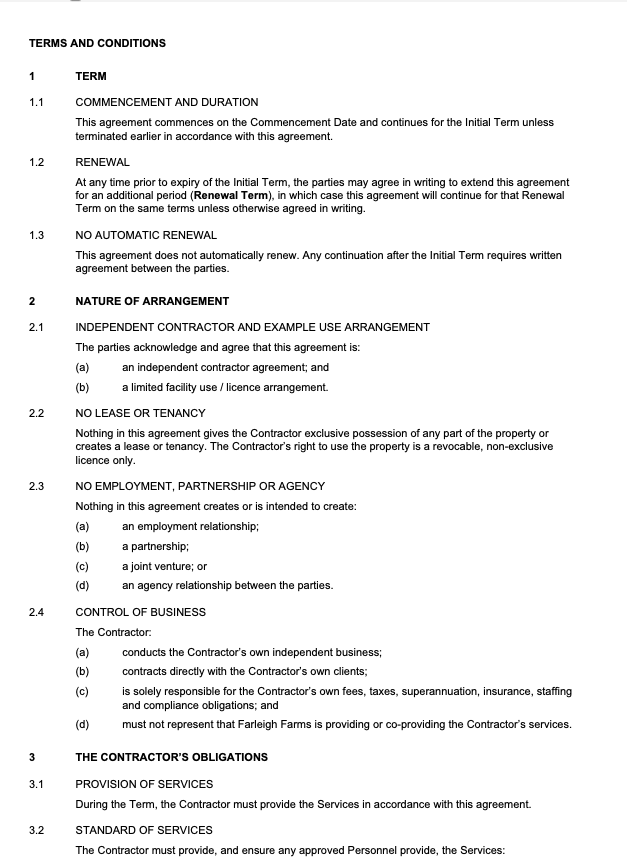
Project
Collaborative Research Agreement
Status
CompletePrepared by

Alex Solo
Senior Lawyer (Australia)
FAQs
Frequently asked questions
Unsure about how we work? We have gathered the most common questions for your convenience.
The main risk is usually not the collaboration itself, but assumptions about who owns what once useful results start to emerge. Research projects often involve pre-existing know-how, shared data, staff time, funding, equipment or technical input from more than one party. Without a clear agreement, disputes can arise over ownership of new IP, publication timing, confidentiality obligations, commercialisation rights or whether one party can keep using the outputs after the project ends. Putting those points into a written agreement early usually creates a much clearer framework for the work.
It commonly covers the purpose and scope of the project, each party's contributions, governance or decision-making arrangements, confidentiality, use of background materials, ownership of newly created IP, licensing rights, publication rules, data handling, liability allocation, termination rights and what happens to project materials at the end. Depending on the collaboration, it may also deal with milestones, funding arrangements, reporting obligations or restrictions on using results outside the agreed project. The exact drafting turns on how the parties will work together and what each side is bringing into the collaboration.
Important details include whether the parties are contributing existing IP, whether one side is funding the work, whether results may be commercialised later, and whether academic publication is expected. It also matters who will generate the data, who can access it during the project, whether subcontractors or students are involved, and whether any party wants exclusive rights to use the outcomes in a particular field. Those practical points shape the clauses on ownership, licensing, confidentiality, publication review and exit arrangements, so they should be settled before the document is finalised.
Template wording often needs adjustment so it matches the actual transaction, workflow and risk allocation. However, research collaborations often break away from generic wording quite quickly. Templates may not properly separate background IP from project IP, deal with publication approval windows, or explain what each party can do with data and results after the collaboration ends. They also tend to gloss over field-of-use restrictions, commercialisation pathways and contribution-specific risk allocation. If the project involves valuable know-how, external funding, or more than one institution or commercial party, a more carefully drafted agreement is usually the safer option.
Often yes, but cross-border collaborations usually need extra care. The agreement may need to address governing law, where disputes are handled, how IP rights will be managed across jurisdictions, and whether local advice is needed for parts of the arrangement. If the project involves overseas institutions, funders or commercial partners, there may also be different expectations around publication, data access or ownership structures. We can draft or review the New Zealand agreement position, but overseas legal issues or local-law advice may need to be handled separately.
Submit an enquiry on this page or click 'Get started'. One of our legal consultants will review it within 1 business day and get in touch to understand what you need.
Your consultant will then email you a fixed-fee quote setting out the cost, scope and timing. If you're happy with it, you can accept the quote and sign our engagement letter online.
Once you've accepted, one of our Australian-qualified lawyers will work with you to complete your project. They'll contact you by email or phone if they need anything.
Sprintlaw works on fixed-fee pricing wherever possible, so you can review the scope and cost before you decide whether to proceed. For the Collaborative Research Agreement service, pricing starts from $2,000.00.
After you enquire, a legal consultant will confirm what is included, the expected timing and whether any extra work is needed before you engage us.
We work online, so we can help wherever you are in New Zealand. Our team works remotely, mainly from Australia.
Your work is done by our Australian-qualified lawyers, who hold Australian practising certificates and specialise in business law. None of them are New Zealand lawyers or hold a New Zealand practising certificate.
Sprintlaw NZ Limited is a legal consultancy, not a law firm, and is not regulated by the New Zealand Law Society. We don't act in court or tribunal matters, conveyancing (including leases and business sales) or other reserved areas of work. Communications with Sprintlaw are unlikely to be protected by legal professional privilege. We still keep everything confidential under our engagement letter.
From quote to delivery in three simple steps
Getting quality legal help for your business has never been easier or more affordable.
Get a free quote
Our legally trained consultants will prepare a fixed-fee quote for you.
Accept online
Accept your fixed-fee quote and e-sign our engagement letter.
Speak with our legal team
Our Australian-qualified lawyers will talk you through your project via phone, video call or whatever suits.
Get a free quote
Our legally trained consultants will prepare a fixed-fee quote for you.
Accept online
Accept your fixed-fee quote and e-sign our engagement letter.
Speak with our legal team
Our Australian-qualified lawyers will talk you through your project via phone, video call or whatever suits.



We've helped over 100,000 businesses
From startups to established teams, we consistently deliver a 5 star service.

“Can’t speak highly enough of my experience with Sprintlaw - quality advice, fast and efficient responsiveness and a professional product.”

Alex Wickert
MD, Adapt Leadership
“I’m so glad I used Sprintlaw - it was easy, affordable and their lawyers gave top quality advice. I could tell they really cared about my business.”

Emmy Samtani
Founder, Kiindred
“They’ve helped us tremendously and are seriously knowledgeable and honest. Couldn’t recommend the crew at Sprintlaw more!”

Amit Tewari
CEO, Soul Burger
Industry leaders

















Not sure where to start?
We can help.
Book a phone call with our team to get started.
Need help now?
0800 002 184