Alex is a co-founder of Sprintlaw. Alex previously worked at a top-tier firm as a lawyer specialising in technology and media contracts, and founded a digital agency which he sold in 2015.
Contents
- Map the handover from dispatch to acceptance
- What the delivery risk and title problem looks like in practice
- The practical baseline when your documents are unclear
- Make the delivery and acceptance schedule work in practice
- The evidence your business should retain before and after a problem
- A practical sequence for prevention, response and escalation
- Key Takeaways
For medical-equipment suppliers and buyers, a delayed or damaged delivery can create much bigger problems than an ordinary stock issue. A clinic might be waiting on diagnostic consumables, a distributor might receive temperature-sensitive devices with broken packaging, or a software-enabled monitor could arrive after a customer deadline has already been missed. Common mistakes include assuming the courier is automatically responsible, assuming ownership and delivery risk are always dealt with clearly in the paperwork, and relying on a purchase order without checking the wider contract set. This guide explains the delivery risk and title problem in a Healthtech and Medtech context, the different roles played by a risk and title clause, a supply agreement and delivery terms, what evidence to keep, and how to prevent, respond to and escalate disputes.
Map the handover from dispatch to acceptance
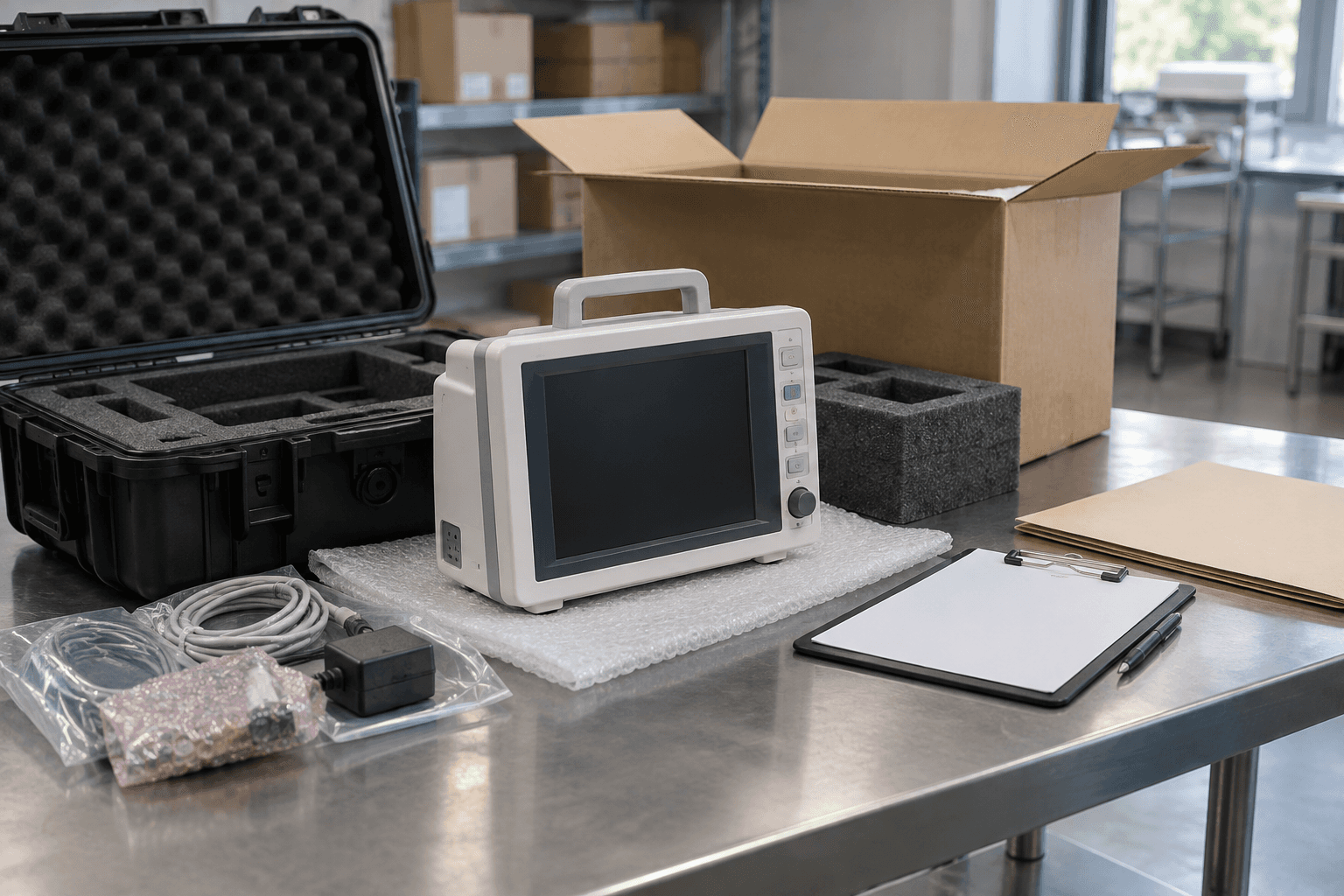
Before you ask for a contract draft or review, collect the facts that drive the legal and operational position. The broader supply and install agreement should cover the whole project; this handover record identifies the different points at which equipment arrives, is tested and is accepted.
- Identify the product type: single-use consumables, capital equipment, spare parts, software-enabled devices, or temperature-controlled products.
- Map the handover points: warehouse dispatch, collection by a courier, arrival at a hospital loading dock, installation, calibration, acceptance testing, or first clinical use.
- Separate the issues: ownership, delivery risk, freight responsibility, insurance and customer acceptance may not be answered by the same document.
- Pull the core documents: quote, purchase order, supply agreement, terms of trade, delivery note, warehouse instructions, courier booking and any service level commitments.
- Record product sensitivities: sterility seals, expiry dates, batch numbers, serial numbers, cold-chain limits and packaging requirements.
- Set the response workflow: inspection on receipt, photo evidence, quarantine rules, supplier notice, customer communications and internal approval for replacements or credits.
For a medical-equipment supplier or operations lead, this checklist often exposes the real problem quickly. The issue may be less about one clause in isolation and more about a mismatch between sales promises, delivery practice and inconsistent documents.
What the delivery risk and title problem looks like in practice
The core issue is deciding who carries the commercial fallout when goods are delayed, lost, damaged or disputed, and working out what the paperwork actually says about ownership and handover. In Healthtech and Medtech, that matters because products are often high value, handling-sensitive and tied to patient-facing operations.
Take three common examples. A distributor ships infusion pump accessories to a private hospital, but the cartons arrive crushed and incomplete. A digital health company imports wearable devices for a pilot programme, but the shipment misses the rollout date. A diagnostics supplier delivers reagent kits to a lab, yet the temperature log suggests exposure outside the acceptable range.
Each scenario raises different questions. Which document governs the order? Was delivery tied to site arrival, unloading or a later acceptance step? Did the buyer record the issue properly on receipt? Was the delay mainly a logistics issue, a supplier issue or a conflict between documents?
This is where the evidence patterns matter. A risk and title clause is usually a drafting tool used to describe ownership and delivery-risk issues. A Supply Agreement covers the wider relationship, including ordering, product scope, responsibilities, service levels and problem handling. A delivery terms contract or terms of trade often deals with practical steps such as freight, inspection, notice, acceptance and replacement processes. In real life, businesses may have all three spread across different forms, which is why disputes start so easily.
The practical baseline when your documents are unclear
For a New Zealand sale of medical equipment, it helps to separate five different ideas that are often blurred together: physical possession of the goods, property or title in the goods, accidental-loss risk, the buyer's chance to examine the goods, and legal acceptance of the goods.
On property or title, the Contract and Commercial Law Act 2017 does not impose one universal milestone such as payment, dispatch, delivery to site or invoice date. Under section 144, for specific or ascertained goods, property passes when the parties intend it to pass, assessed from the terms of the contract, the conduct of the parties and the circumstances of the case. For a hospital imaging unit, for example, the contract might say title passes on full payment, on delivery to the site, or only after identified serial-numbered equipment is appropriated to the order. If the paperwork is inconsistent, the dispute is often about proving that intention.
On accidental-loss risk, the default rule is different from what many businesses assume. Section 148 says that, unless otherwise agreed, the goods remain at the seller's risk until property transfers, and after property transfers they are at the buyer's risk whether or not delivery has been made. The same section also says delayed delivery caused by one party's fault can shift the risk of loss that would not otherwise have happened, and it preserves bailee duties. So a contract can separate title and risk, but the wording needs to do that clearly.
Inspection and acceptance are also separate. Under section 169, if goods are delivered without the buyer first examining them, the buyer is not treated as having accepted them until the buyer has had a reasonable opportunity to examine them to see whether they conform with the contract. Under section 170, acceptance can happen by telling the seller the goods are accepted, by doing an act inconsistent with the seller's ownership (subject to section 169's examination protection), or by keeping the goods for a reasonable time without rejecting them. A delivery signature may only prove receipt. It does not automatically mean every defect was waived, and acceptance is not limited to one final sign-off document.
For medical equipment, it is sensible to keep goods receipt, installation or calibration completion, and any later operational or user sign-off as separate handover records. That helps distinguish "the unit arrived" from "the unit was installed and tested against the contract". It also supports traceability: Medsafe says sponsors of medical devices are expected to maintain records of the supply so affected customers can be identified for recall or corrective action.
Delivery, risk and acceptance clauses do not replace the separate obligations for lawfully supplying medical devices. Medsafe explains that the Medicines Act 1981 and its Regulations control supply, and other legislation or regulations may also apply to particular devices. The supplier remains responsible for meeting all applicable requirements; an agreed handover or acceptance signature is not a substitute for that compliance.
This is not an international-sale or consumer-refund guide. If the Consumer Guarantees Act 1993 is relevant, it is not enough to say the buyer is a business. Under section 43, contracting out requires a written agreement, supply and acquisition in trade, all parties being in trade and agreeing, and it must be fair and reasonable. Also, section 198 of the CCLA only excludes the listed CCLA provisions where the CGA applies; it does not create a blanket override of every sale-of-goods rule.
Make the delivery and acceptance schedule work in practice
The following are commercial drafting questions for the particular order, not a compulsory medical-device contract template. Agree on the practical handover points before the equipment moves, and make the quote, purchase order and signed terms consistent.
Rather than assuming your paperwork already answers delivery disputes, review whether the contract set, including any product supply terms, clearly deals with points like these:
- Delivery point: is the key handover event dispatch, arrival at site, unloading, installation or a later acceptance step?
- Product characteristics: are sterility, packaging integrity, temperature control, expiry dating, batch traceability or serial number tracking described clearly?
- Responsibilities: who arranges freight, who books the carrier, who checks the goods and who communicates with the end customer if something goes wrong?
- Inspection process: how and when are shortages, broken seals, missing components or visible carton damage recorded?
- Service expectations: are delivery windows, escalation contacts, part-shipment rules or replacement expectations set out anywhere?
- Plan B: if supply fails, is the next step replacement stock, repair, return logistics, a credit or a hold on customer rollout?
- Non-standard steps: for installed or software-enabled devices, is there a separate workflow for configuration, calibration or testing?
For example, patient monitoring hardware under a hardware supply contract may arrive physically intact but still not be ready for clinical use until software setup and testing are completed. By contrast, a box of sterile consumables may need immediate visual inspection, batch recording and quarantine if seals appear compromised. These are not just legal drafting points. They are operational facts the documents should reflect clearly.
It is also worth checking whether your quote, purchase order and supplier terms are saying the same thing. A standard form that works for ordinary inventory may be too vague for temperature-controlled reagents or connected devices used in a clinical setting.
The evidence your business should retain before and after a problem
If you need legal help with a delayed or damaged delivery issue, the fastest way to get useful advice is to provide a complete evidence pack. Sending only the invoice and a few emails usually slows everything down.
Start with the deal documents. That normally includes the signed supply agreement, quote, purchase order, standard terms, order confirmations and any service level commitments. If sales, procurement and operations each used different forms, include them all.
Then gather the delivery trail:
- dispatch confirmation and packing list
- carrier or courier booking details
- delivery note and proof of delivery
- photos of packaging at dispatch and on arrival
- batch, lot or serial number records
- temperature logs or device data where relevant
- internal incident reports and quarantine records
- emails or messages about delays, damaged cartons, shortages or replacements
For medical-equipment suppliers, product-specific evidence can be important commercially and operationally. If you are appointing a distributor rather than negotiating an individual equipment handover, the broader medical-device distribution agreement needs separate attention. If sterile dressings arrive with broken outer seals, photograph the seals before the cartons are moved. If a connected diagnostic device fails during setup, record whether the issue looks like transit damage, missing parts or a configuration problem. If cold-chain stock arrives warm, preserve the logger output and receipt timing.
Also keep evidence of your own process. Who inspected the goods? When were they received? Were exceptions noted on delivery? Did the stock get placed into usable inventory before the problem was raised? A disciplined intake workflow can make a major difference when the facts are later disputed.
A practical sequence for prevention, response and escalation
The most useful approach is to build a repeatable workflow rather than improvise each time a delivery issue appears.
Prevention: align the quote, purchase order and supply terms before orders start flowing. Make the key handover points, inspection steps and internal escalation path easy for operations staff to understand. Train warehouse, customer service and account teams on what evidence must be captured for sensitive goods.
Response: when a delay or damage issue appears, stop the facts from drifting. Quarantine affected goods where appropriate. Record photos, condition, quantities, identifiers and any environmental data. Check the contract set immediately so the team can see which terms may be relevant, while recognising that the outcome will still depend on the full documents and facts.
Escalation: move the issue up quickly when any of these are present: patient-facing urgency, large-value equipment, repeated delivery failures, conflicting contract documents or disagreement over responsibility. The contract set should ideally provide a framework for resolving problems and a plan B if supply does not happen as expected.
A practical internal decision framework is:
- What exactly failed: timing, condition, quantity, specification or installation readiness?
- Which document or combination of documents appears to govern this order?
- What product sensitivity makes the issue more serious, such as sterility, temperature or traceability?
- What evidence proves the condition and timing at each handover point?
- What immediate commercial decision is needed: reject, replace, repair, credit, quarantine or accept with conditions?
That sequence keeps legal review focused on the pressure point instead of turning into a broad document hunt. It also helps the business decide what needs to happen operationally while the paperwork is being assessed.
Common questions from Healthtech and Medtech businesses
Can a contract deal with ownership and delivery-risk issues separately?
Yes. The default position in section 148 of the Contract and Commercial Law Act 2017 is that risk passes with property, unless otherwise agreed. That means the parties can expressly separate the two - for example, by saying title stays with the seller until a stated event, while transit or site-delivery risk shifts earlier or later. But if the wording is split across a quote, purchase order and standard terms, the real question is what the full agreement shows about intention and handover, read with section 144 and the surrounding conduct and circumstances.
Is a purchase order enough to deal with damaged deliveries?
Often not by itself. A purchase order may record what was ordered, but it may not fully explain inspection steps, service expectations, notice pathways or what happens if goods arrive late or damaged. If supplier terms, customer terms and the purchase order do not line up, the paperwork can create more argument rather than less. Higher-risk products usually need a fuller contract set.
What if the goods look fine on arrival but fail later?
That is why intake and acceptance processes matter so much. Some products can appear fine visually but still have issues linked to handling, missing parts or environmental exposure. For Medtech equipment, installation and testing records may be as important as the delivery note. For diagnostics stock, batch records and temperature data may matter more than the outer carton alone.
What should we send for a legal review first?
Send the signed contract set, the purchase order trail, dispatch and delivery records, photographs, product identifiers and a short timeline of what happened. Include the business impact too, such as customer commitments, stockout risk or replacement cost. That gives the reviewer a much clearer picture of the wording, evidence gaps and immediate priorities.
Key Takeaways
- Separate the handover questions: who has physical possession, when property or title passes, when accidental-loss risk passes, when the buyer has had a reasonable chance to examine the goods, and when the buyer is legally treated as having accepted them.
- For specific or ascertained goods, CCLA section 144 looks to the parties' intended timing for transfer of property, judged from the contract terms, conduct and circumstances - not a universal rule that title always passes on payment, dispatch or delivery.
- Under CCLA section 148, risk follows property unless the parties agree otherwise, with extra points for delay caused by a party's fault and continuing bailee duties. If you want transit risk, site-delivery risk and title dealt with differently, say so clearly.
- CCLA sections 169 and 170 distinguish examination from acceptance. A delivery signature may show receipt only; acceptance can happen later by express indication, by an act inconsistent with the seller's ownership (subject to the statutory examination protection), or by retaining the goods for a reasonable time without rejection.
- For installed medical equipment, keep separate records for receipt of goods, installation or calibration, and any later operational sign-off. For regulated traceability, Medsafe expects sponsors to maintain supply records so affected customers can be identified for recall or corrective action.
- If CGA issues are in scope, a business-to-business label alone does not switch the Act off. CGA section 43 requires a written contract, supply and acquisition in trade, all parties agreeing while in trade, and a fair-and-reasonable contracting-out position.
For help drafting or reviewing medical-equipment supply terms, risk and title wording, or delivery and acceptance schedules, contact Sprintlaw on 0800 002 184 or team@sprintlaw.co.nz for a free, no-obligations chat. A live dispute or urgent safety issue needs advice and response steps appropriate to the actual documents and circumstances.
Drafted by Taylor, Sprintlaw's AI, and overseen by Alex Solo. How we write

Alex SoloCo-Founder